Climate Disasters Displaced 250 Million People During the Last Decade
Nov 21, 2025 | Source: www.asisonline.org





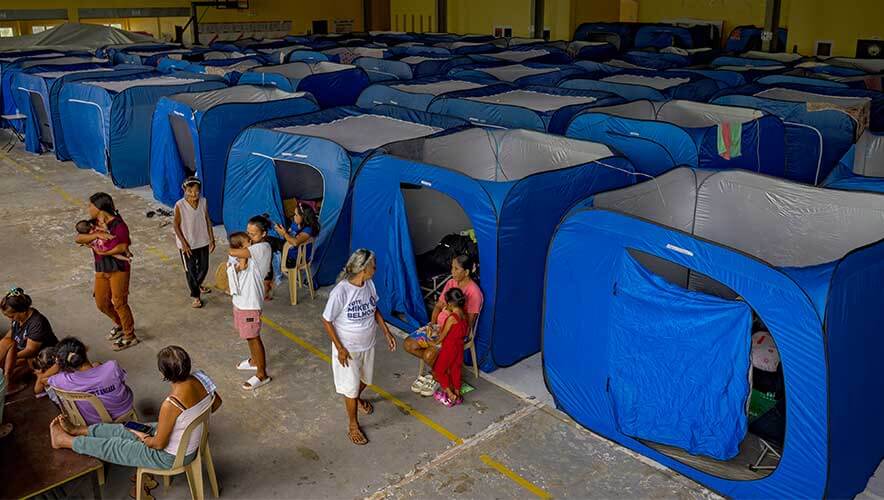
Typhoon Fung-wong displaced 1.4 million people in the Philippines this past weekend. It’s just one example of the more than 67,000 people that are forced from their homes due to a weather-related disaster every day, according to a new report from the United Nations High Commissioner for Refugees (UNHCR).
In a major study released in November, No Escape II: The Way Forward, the UNHCR assessed that weather-related disasters have caused more than 250 million displacements—people who are forced to move from their homes to another location in their country—in the past decade, a 10 percent increase compared to the ten-year average through the end of 2023.
The UN office also found that individuals who have been displaced typically are forced to move to areas that are fragile and conflict-affected, further exposing them to climate-related hazards. Its research found that three out of every four refugees and people fleeing war or persecution are now living in countries that are “highly vulnerable” to climate-related hazards.
“In 2024 alone, one-third of the emergencies declared by UNHCR were due to the impacts of extreme weather events on people who had already been displaced by conflict,” the report said.
For instance, the UNHCR highlighted that many of the world’s largest refugee settlements are in places that have harsher weather conditions than those found elsewhere in the same countries.
“Refugee settlement areas face extreme heat and more variable rainfall in Kenya, Ethiopia, and Rwanda; severe temperatures in Jordan and Pakistan; and intense rainfall in Bangladesh,” according to the report. “UNHCR country operations are also increasingly called on to prepare for and respond to new or exacerbated emergencies, such as drought in Zambia and floods in Brazil, Burundi, Cameroon, Chad, Mali, Niger, Nigeria, and South Sudan.”
Local governments often choose these settlement sites to minimize land costs, to channel potential benefits of the camp to nearby communities, or because the site is the only land available. But this in turn makes these sites more exposed to natural disasters—especially drought and flooding—increasing health risks, food insecurity, and social tensions.
Climate change and environmental degradation do not directly cause war or conflict, but they can exacerbate or prolong it by making poverty worse, increasing tensions over access to natural resources, or raising economic instability. It can also cause job loss, which can increase the likelihood of people being recruited into an armed group.
“In northeast Nigeria, for example, 16 percent of survey respondents acknowledging climate-related agricultural difficulties said they knew someone who joined Boko Haram because of these challenges,” the report explained. “The figures are even higher in Cameroon (18 percent), Chad (37 percent), and Niger (57 percent).”
While this is the situation on the ground now, the UNHCR warned that by 2040 the number of countries facing extreme exposure to climate-related hazards will rise from three to 65. Many of the countries in this predicted 65 figure—Cameroon, Chad, South Sudan, Nigeria, Brazil, India, and Iraq—already host 45 percent of existing displaced populations, while the others are experiencing fragility or conflict.
“This convergence of climate risk, displacement, and fragility presents a critical challenge for the delivery of vital support by humanitarian and development actors alike,” according to the report.
Key to addressing this challenge are four steps the UNHCR outlined in the report for global leaders to take:
“Each year, the compounding impacts of conflict, extreme weather, and disasters on refugees, displaced people, and their hosts continue to deepen—but so does our understanding of what works: bold investment, inclusive action, and trust in affected communities,” wrote Fillippo Grandi, UN high commissioner for refugees, in a forward of the report. “The gap between needs and available resources remains wide, and people cannot survive in that gap. We must bridge it—not with words but with firm will, solidarity, and sustained climate action.”
The report’s authors hope that global leaders will act on these four steps at the UN Climate Change Conference, being held this week in Brazil, to address challenges and opportunities of climate action in displacement.
“Climate change is not only amplifying existing vulnerabilities—it is also fueling displacement trends, creating complex and compounding risks for refugees, other displaced people, and their hosts, leaving many with no escape from its impacts,” the report explained.
 We couldn’t find an account matching the username and password