How climate change contributed to the December 2025 floods
Jan 22, 2026 | Source: www.dailyuw.com





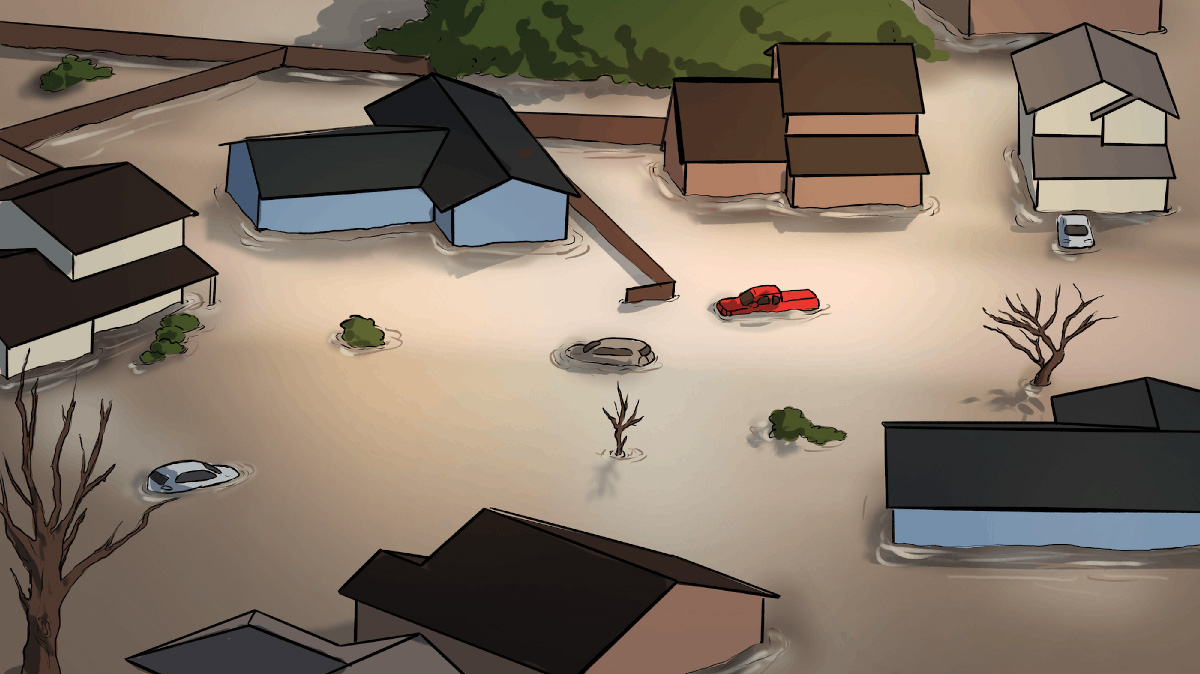
December 2025 was marked by catastrophic flooding across Western Washington. Highways crumbled, levees failed, and homes were submerged. Roughly 100,000 people were displaced, and a fatality was recorded.
Eric Salathé, professor and department chair of UW Bothell’s School of Science, Technology, Engineering, and Mathematics and an expert in climate change, explained the root causes of the flooding. According to Salathé, as the environment has continued to warm, snowcaps melted faster, and what typically would fall as snow instead fell as rain, meaning rivers were unable to accommodate the excess water.
“We’ve seen 2 degrees Fahrenheit of warming so far,” Salathé said. “There was a bit of snow in the mountains on Dec. 10, and then that all melted. Where did that water go? It went into the rivers, and that was contributing to the floods.”
Salathé noted that Washington, by design, will flood; it is the geographic nature of the state. Many cities in Washington are situated on floodplains, flat areas of land positioned near rivers, streams, and other large bodies of water. However, the climate crisis has accelerated the frequency and intensity of flooding throughout Washington.
“We've constricted [the rivers], we've dredged and levied these things, right, to keep them in their banks … That's the problem. It works until it fails, the way we've managed floods. That's why a small amount of climate change is so important,” Salathé said.
Although higher river streamflow from melting snowcaps was the primary cause of the December 2025 flooding, it is not the only way climate change will contribute to flooding in Washington. Sea levels have risen along the coasts, including in the Puget Sound, boosting the likelihood of deeper coastal river floods and local coastal saltwater flooding. Sea level rise is attributed to ocean warming and melting land ice. Climate change will also increase the intensity of precipitation, another risk factor for flooding.
As the planet warms, the air’s capacity for water vapor increases — and atmospheres with more moisture produce more intense precipitation events. However, Salathé noted that this heightened level of rainfall will be observed closer to the end of the 21st century.
Many families who lost their homes to the floods are struggling to rebuild. Most home insurance policies in Washington state don’t include flood damage; flood insurance must be purchased separately through a private carrier or the National Flood Insurance Program. As homeowners’ insurance costs have soared, many residents explained that purchasing a separate flood insurance policy was not feasible, as they already had countless other fees to account for.
Furthermore, flood insurance does not cover all damage costs, such as mold. Mold spore growth begins between 24 to 48 hours after a flood, and poses a threat to human health. Residents are also now faced with the challenge of treating the ensuing mold from the floodwaters without insurance coverage to help.
In addition to damaging homes and properties, floods are associated with a number of public health risks. Flood water can be contaminated by debris, oil, waste, among other particles. Contaminated flood water can cause wound infections, skin conditions, tetanus, gastrointestinal illness, and other bacterial infections.
The adverse effects of the December 2025 floods disproportionately impacted marginalized communities, highlighting an issue that has permeated throughout the United States: environmental racism. Environmental racism refers to a form of systemic racism in which historically disadvantaged groups are more likely to be burdened by environmental health hazards. Marginalized communities disproportionately make up the percentage of the population that lives on floodplains, largely due to historic discriminatory practices such as redlining. For example, Latinx communities make up 8% of the state population, but 16% of residents in flood zones.
The flood disasters were able to be predicted beforehand, giving many people the opportunity to evacuate and plan their next steps. President Donald Trump’s administration has imposed funding barriers on the National Weather Service and National Oceanic and Atmospheric Administration, which significantly diminishes the ability of states to predict and prepare for extreme weather events. These programs are vital to ensuring civilian safety, and they must be protected.
Climate change will continue to exacerbate natural disasters, making strategies for mitigating the effects of climate change critical. This includes working to dismantle environmental racism, supporting policies that aim to reduce greenhouse gas emissions, and keeping funding intact for programs that detect extreme weather events.
 We couldn’t find an account matching the username and password